Sunday, January 19, 2014

Veiled Joy!

I was woken from my slumber,
Perhaps by the cold,
All these layers of comfort,
But warmth they could not hold.

Bored with the pretentious game,
I decided to give up.
Soon to realize that,
They were voices that woke me up.

Voices of joy,
of happiness and laughter.
Voices of irrational exuberance,
of renewed enthusiasm.

Little, soft and pristine,
Precious whites descended,
From the skys, and millions of them.
All of a sudden, it was all quite.

The voices were gone,
As all were lost,
At the beauty of the sight,
With the snow covering all,
We bid adieu to the cold night!

It all looked so sparkling,
It all looked so white,
The elderly were concerned,
While the kids slid around.
All looked so joyous,
And even the nature smiled!

As the beautiful day dusked,
Our fleets retreated.
Still soaked in the beauty,
Still wet with joy.

They all went back, to those layers,
Of comfort and of warmth,
Satisfied with the harmony,
We portrayed that night.

But few had the vision,
That dawn was to unveil.
The soothing light was to be,
The uncovering heal.
As the white layer diminished,
the truth was coming out,
shameful and filth.

The snow left us,
Deep in disgrace.
The ubiquitous garbage,
Created by the human greed,
Smirked at the mankind!

“What have you done,
Why have you ruined your mother?
How long could have,
The pretty snow covered your filth?
How long?”, it said.

Embarrassed, some sighed.
But for most,
it didn't matter,
it never did, never will,
and the mankind would perish someday,
beneath this veiled joy!


Tuesday, January 14, 2014

[Book review] The Elephant Paradigm * * *

The Elephant paradigm
By Gurcharan Das

Someone once told me that one the greatest lucid and through description of Indian economy right from the eve of independence to the reform years was in the book “India Unbound” by this author. So as soon as I got the opportunity I grabbed this book and once I got started with it, I could not keep it down. Impressed by the writing style of the author, I recently caught hold of this book which apparently takes the story forward and describes the nervous nineties of India post the reforms.

The basic problem is that you miss the flow you enjoyed in author’s other writings essentially because this is more like a collection of his essays rather than a monolithic rambling. Another problem some people might face is that he gets unnecessarily philosophical at places which does not go well with the theme of the book.

Nevertheless, it again has the hints of the lucid writings in his previous book and helps a great deal in understanding how our decade after the reforms went and what lies ahead. Mr. Narayan Murthy is quite right in saying that this book should be made part of the curriculum of every Indian student.

Some great lines from this book…..

“The Americans, who more than others, tend to live in the present , have made an industry of characterizing their decades- ‘ the roaring twenties’; ‘the swinging sixties’. If I had to do the same for the 1990s in India, I would call the decade ‘our liberating nineties’ “.

“And in the end, India is not a tiger, and change will always be slower than in East Asia. India is an elephant which has stirred from its slumber and has finally began to move ahead with a degree of determination. However, unlike a sprinting tiger that runs out of steam, the elephant has stamina”.

“The 19th century belonged to Europe, the 20th went to America, and many believe that the 21st is likely to be Asia’s”.

“When you bribe, your work gets done in east Asia. In India, even after paying a bribe, you are never sure!”

“In my thirty years of active business, I did not meet a single bureaucrat who really understood my business yet he had the power to ruin it”.

“It was strange to read of the rise of Hindu fundamentalism because Hinduism is a religion without fundamentals”.

“Grace mark is a disgraceful feature of our academic life”.

“It is, in the end, some sort of irony that Rajiv Gandhi was willing to ditch his grandfather’s socialist vision and embrace Mahatma Gandhi’s vision of village governance”.


Saturday, January 11, 2014

Book Review: Himalayan Blunder * * *

About the author
         Brigadier J.P.Dalvi was born in Basra (Iraq)on 3rd July 1920 where his father was serving with the British Administration. In 1929, he came to India and completed his school and college education in Bombay. At the outbreak of the 2nd World War, he quit his education and decided to join the Army. In January 1962 he volunteered to command 7 Infantry Brigade in the North-east Frontier Agency Sector of Towang. He was captured by the Chinese Forces on 22nd October and repatriated in May 1963. It was in their custody that he formed the general outline of the book that would tell the real story of the biggest blunder in Indian military history.


Synopsis
         It is not just another book on the corner, it is rather a memoir. A memoir starting in the decade preceding the India-China was in the year 1962.  Dalvi starts with building the premise way before the actual occurrence of the war as the real reasons lay in the historical buildup to the war. Firstly, he discusses the Indian role in the Tibet region and how those historical dealings between the governments of British India and Tibet would lead to disastrous repercussions in the coming decades. Secondly, Dalvi talks in detail about the fibers of Indian Foreign Policy  in the Nehruvian era and how it had a deep impact on the equations of the possible war. Then he describes the half-hearted preparations for the war by the Indian side. Further he describes the war scene in grave detail and how Chinese perceived the Indian side.

Part wise analysis

Part1: The years of credulity and negligence

        This being the genesis of the political plot of the war he goes to the historic origins of the story and details the role of British India in the dealings with Tibet which did not go very well with China. He supports his analysis by the words of India’s distinguished President, Dr. S. Radhakrishnan when he exclaimed, “We have been negligent and credulous”. He talks about the uneasy lull during the first half of the decade of 1950s and how casually Indian Government took the Chinese incursions in those times. He talks about the half-hearted preparations of the army and the fact that in terms of capacity and military might we had already lost the war to China.

Part2:The fateful year 1962

         Here he talks of the wishful thinking of the political bosses and the armchair assumption that the Chinese would never attack. Nehru was of the firm belief  that the Chinese would totally respect the principles of Panchsheel. Here he describes the disastrous “Forward Policy” or the Operation Onkar which gave the Chinese a reason to attack.

Part3: On to the Namka Chu

         Here he neatly describes the pre-war setting and the burgeoning of both forces on either side of the river. The description here is so lively that you actually feel while reading that you are in fact roaming in the battle field and witnessing the preparations for real. Here the author critically discusses the Operation or intention of Indian government to “evict the Chinese from the Indian territories.

Part4: The end of make believe

         Here the author describes the homecoming of our political brass who where on international diplomatic mission at the time of the Chinese incursions. He takes a critical dig at the decisions and pre-occupations of our Prime Minister in those fateful times. He emotionally describes the war-setting chosen by the Indian forces was extremely vulnerable and put the Chinese at a vantage point. He describes the clash at Tseng Jong and the subsequent policy fluctuations on the Indian side.

Part 5: The battle at Namka Chu River

         This part starts with the amended mandate for the forces. Witnessing the Chinese might in the clash at Tseng John, the Indian leadership decides that it would be best to defend the positions rather than mounting an attack on the proven-superior Chinese forces. Here is critically analyzes both the stances and is able to prove to the reader that both where utterly wrong decisions and the right course would have been something else. Moreover, he criticizes the absence of higher leadership at the most crucial time in the war. And lastly he describes the humiliating times when he was a captive of the Chinese Army.

Part6: The reason why

         Moving out from the battlefield, he launches a ruthless and deserving attack on the political leadership of that times. He asserts that the “civil supremacy” cannot be allowed to interfere in matters which are purely strategic and military in nature. Then he compares and contrasts the roles of various Defence Ministers of India in those fateful years.

Critical Evaluation
         Dalvi’s writing is immensely descriptive which makes it more of a memoir than a story.
         His style of presenting pre-analysis and post-analysis helps the reader tremendously to understand the nitty-gritty's of war with ease. Moreover, the various references made by him and the illustrations taken from various works to make the reader understand his own references shows the kind of detailed work that he has undertaken in the making of this wonderful masterpiece. One of the shortcomings though has been the fact that it is conspicuous that the author is not a regular writer and in the process he gives away the gist of the whole event in the early ramblings itself. Also he seem to reassert the same assertions again and again which becomes like tiny road-blocks for the reader. And finally, this brave attempt to tell the truth to the world must be commended eternally.


Tuesday, January 7, 2014

Soothing Jaisalmer

I have been longing to travel to Rajasthan since years and this finally happened last year when I got some free time in December which is incidentally the best time to travel there. I started the trip from Jaipur aka the Pink City and all that jazz. The place has like a zillion forts and a million emporiums keeping the tourist traffic busy all along. But the places I would recommend to you are Albert Hall Museum and Amer Fort. Rest is lackluster in front of these grand creations. And if you want a feel of the pink city walk through the local markets. That sums up Jaipur for me and can be seen in a day or two.

After that I traveled to Jodhpur sometimes also called as the Blue city due the blue paint on the local house when you see that from the city fort. I would  recommend you to travel throughout Rajasthan via the ultra-comfortable volvos being run by the RSRTC. Travelling by road only would give you the feel of real rajsathan. Getting a train ticket is difficult anyways as IRCTC sucks big time. Jodhpur is also traditionally filled with Forts and other architecture which is very similar to those of Jaipur. I would recommend only the Mehrangarh  Fort where Nolan had come once to shoot the Dart Knight Rises. Also, so take a guide in all the forts you see otherwise it would be only seeing dirt and bats. Don't let the city guides fool you to take you to some retrograde gardens filled by bird and monkey shit. Rather walk through the local markets to get a feel of the culture.

My nest destination lies near the western frontiers of the State and is the best place to see in Rajasthan and this is the place which prompted me to blog about Rajasthan. The calm, beautiful and soothing jaisalmer. We again traveled via bus to reach Jaisalmer from Jodhpur which is like five hours journey through the arid yet beautiful terrain of Rajasthan. Luckily we got some reference to one of the hotels in the city called Hotel Haveli which played a big Part in our stay there.

Jaisalmer is a small town closest from the beautiful sad dunes of the Thar and Gobi desert. The settlement is so small that we managed to see the entire city many times on our walking tours. And if you plan to stay at Hotel Haveli, it would be further convenient to you as all the tourist attractions are at a walking distance from this Hotel. Apart from that you would love the hospitality and food at this place. Among things to see in Jaisalmer, there is this beautiful and calm lake gadiser where you can boat your way to calmness. There are some temples and shopping options available alongside the lake which would keep your female companions busy and ergo you can relax and enjoy feeding the catfish and ducks in the lake. This is way better than the crowded and grand lakes of other cities in Rajasthan. It is also best suited for artists and painters.


Then just in front of this lake there is a little museum which has a great collections of ancient entities belonging to this regions and the icing on the cake is the Puppet Shows that they organize in the evenings. Highly recommended! This is solely the initiative of an old retired man who wants to keep this culture alive. Please meet this guy, you would really feed good!

Then like every city in Rajasthan, Jaisalmer also has a fort of its own. This being the only fort where the locals are allowed to live and do business. So, you can go for this one. be careful though of the costs of items in Jaisalmer as everything is overpriced. Do your shopping from Jodhpur and Jaipur instead. Then along with the fort you can visit the nearby Havelis and market on foot. No big deal!

Now comes the most important and beautiful experience of Jaisalmer. The Sam sand dunes which are located about 40 kms away from the city and you have the option of taking a cab which is ultra-boring and the other is that you rent a bike and drive yourself. I did that and the journey is the best one I have taken till date. The road is excellent and so is the landscape on either side of the road. There is some ancient village on the road which you can ignore and go straight to the sam sand dunes. There you should have a pre-booking for your night stay in the tents to avoid any one exploiting you. Then go straight to the sunset point and enjoy the sand dunes till you get soaked in. That is generally followed by some cultural evenings, dinner and then sleep over in the tents. Insist the operators that you want to sleep in the dunes and that would make your trip uber-cool!


So those, yearning to get a real feel of Rajasthan, must go to jaisalmer!

Friday, November 15, 2013

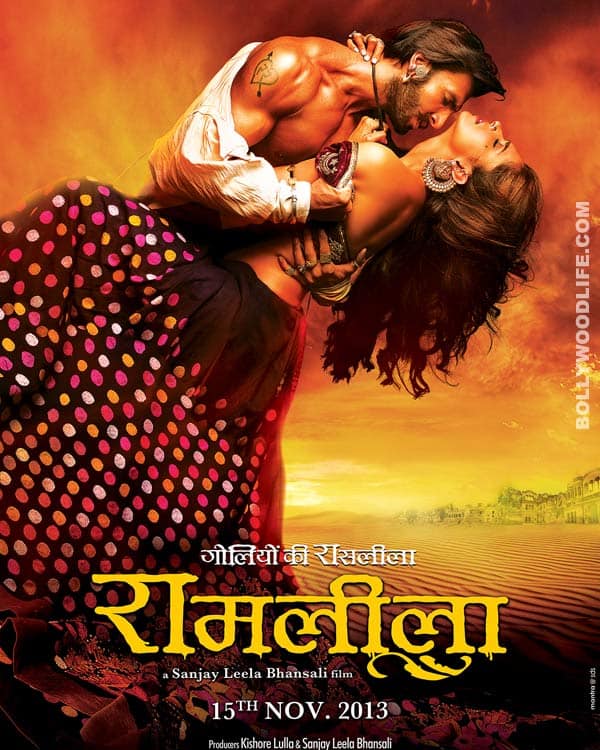
Ram-Leela * * *

Sanjay Leela Bhansai has grown so much today and that seems to be the high point of this movie. In his earlier romantic ventures all we could connect to were the ubiquitous shades of blue. There was such colossal and conspicuous use of the color 'Blue' in his earlier romantic escapades that children had stopped asking the question why the sky looked blue? In Ram-Leela, he has apparently moved on and has given screen space to all the other colors. Chromatic secularism, one might say!

Long before the release, the word had already spread that this is a adaptation of the bible of love, Shakespeare's Romeo & Juliet. And those who had no idea, the initial credits indicate the influence. This in a way gives the whole theme and climax out at least for those who know the tragic love story. Nevertheless, it turns out to be a little different and of course colored with the Bollywood masala and songs. Now one of the things with love stories is that, the audience needs to bond with both the protagonists and the love should grow gradually and not within a span of three screens. Only then, we connect to their love, their pain and their agony. But unfortunately that would not happen here, you would find yourself more fascinated by other supporting characters.

The movie is based in a vintage Rann of Kachch village where there are two clans having bad blood between them and have been fighting since the last 500 years and desperately waiting for some cross couple to fall in love to that the hatred could subside. The village's economy is entirely based on the selling of guns and ammunition and everyone in the villages keeps a ghoda with them irrespective of age and gender. You feel like you are wandering in the imagination of Mao Zedong where power flows from the barrel of the gun. Ranveer Singh (Ram) belongs to the head family of one clan and is the Hugh Hefner of the clan not indulging in any gun action and more into the hot chikkas of the countryside. Our playboy believes that the bad blood between the clans should end so that they could have access to the ultra-hot gals of the other clan.

And this is how he meets Leela when he trespasses into the rival zone on the colorful day of Holi. No prizes for guessing who she is! Of course she would be the gorgeous single and available daughter of the head family of rival clan. And then, instant impact! They fall in love and start making out at the blink of an eye. Gosh, I have seen forward people but this was supposed to be a vintage setup for crying out loud. Anyways, Deepika (Leela) is getting hotter by the day, a sure sign of global warming! Then rest of the plot is anybody's guess. The climax is little different then what you would presume and the formula of unrequited love is kindda evergreen.

Talking of performances, Ranveer's six packs have put up a firm performance, rest of him not so much. Surprisingly Deepika has delivered a flawless performance as a chulbuli hottie at first and then a firm lover later on and the transformation she brings is fabulous. But for me its the support cast that shines brighter with mind blowing performances from mainly Supriya Pathak and also Richa Chadda. They shape the real leela  of the movie. The songs are not that great barring the happening item from our heartthrob Priyanka but the background score and cinematography is commendable. SLB definitely has potential but here that could not be transformed into frames. And also SLB, it would have been better to cast someone else for Ram, someone who does not look like Hanuman!

Nothing new, watch it for unrequited love, Deepika and Supriya!